
SEO today is not just about ranking on Google.
It is about being found everywhere your audience searches for answers.
That includes Google Search, AI Overviews, AI Mode, ChatGPT, Perplexity, Gemini, YouTube, Google Lens, voice assistants, social search, and local map results.
I’m Muhammad Daniyal, an SEO and Content Strategy Expert with 5+ years of hands-on experience helping businesses grow through organic search, content, and AI-first visibility.
I work with dentists, plumbers, real estate businesses, construction companies, doctors, taxi services, freelancers, and agencies to help them get traffic, leads, and stronger online visibility.
And here is the honest truth:
SEO in 2026 is not about doing one thing perfectly.
It is about building a system.
You need technical health.
You need helpful content.
You need topic depth.
You need clear structure.
You need brand trust.
You need local proof.
You need AI-readable content.
You need ongoing updates.
This checklist will walk you through the main areas that matter in 2026.
Let’s break it down.
1. Set Up Your SEO Command Center
Before you improve rankings, you need the right tracking setup.
You cannot fix what you cannot see.
Your SEO command center should help you answer simple questions:
Is Google crawling my site?
Are my pages indexed?
Which keywords are bringing impressions?
Which pages are getting clicks?
Which pages are losing traffic?
Where are users dropping off?
Which content needs updating?
Which technical problems are slowing growth?
Nowadays, this setup is even more important because search visibility is split across traditional rankings, AI answers, snippets, images, videos, maps, and zero-click results.
Google Search Console
Google Search Console is still the first tool I check for SEO performance.
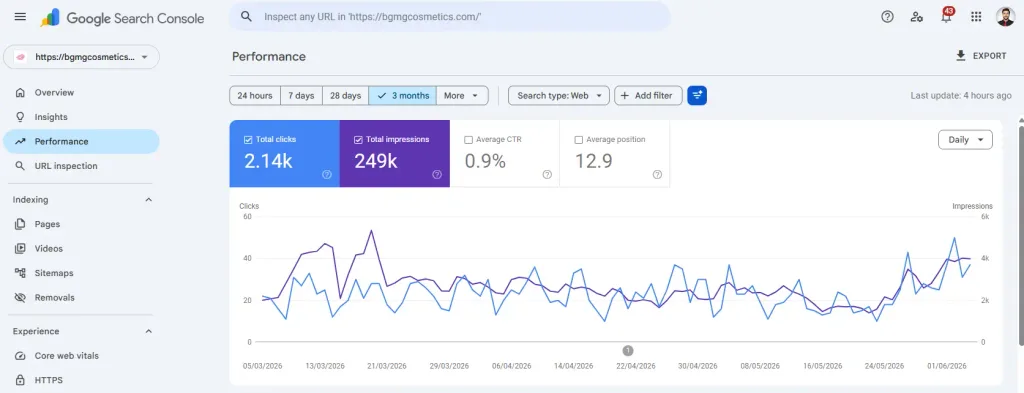
It shows:
Indexing issues
Crawl problems
Search queries
Click-through rate
Average positions
Page experience issues
Core Web Vitals
Manual actions
Sitemap status
One thing to correct from many SEO discussions:
Google does not currently give most site owners a separate “AI Overview impressions” report inside Search Console. Google says sites appearing in AI Overviews and AI Mode are included in the overall Search Console Performance report under the “Web” search type.
So instead of waiting for a separate AI visibility dashboard, track:
Pages gaining impressions but losing clicks
Queries with rising impressions and low CTR
Pages appearing for long conversational searches
Traffic changes after AI-heavy SERP updates
Content that receives impressions for comparison-style and question-based queries
That gives you a practical view of how AI search may be affecting your site.
GA4
GA4 helps you understand what happens after the click.
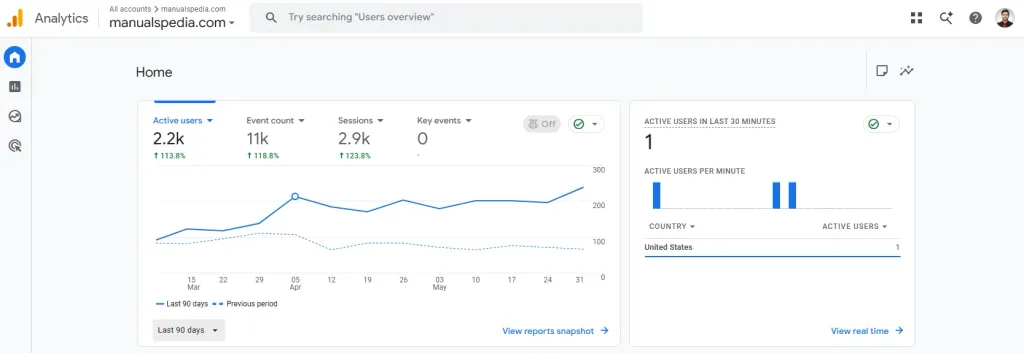
Search Console tells you how people find you.
GA4 tells you what they do next.
Track:
Organic traffic
Conversions
Engagement rate
Landing page performance
Traffic source quality
Lead form submissions
Scroll behavior
Returning users
For service businesses, do not only track traffic.
Track leads.
A page with 300 visits and 20 leads is better than a page with 5,000 visits and zero business value.
SEO Plugins and Website Platforms
If your website runs on WordPress, use a reliable SEO plugin.
Good options include:
Rank Math
Yoast SEO
SEOPress
Use them for:
Meta titles
Meta descriptions
XML sitemaps
Robots.txt controls
Canonical tags
Schema markup
Basic on-page checks
Redirects
Internal link suggestions
But remember this:
An SEO plugin does not do SEO for you.
It only helps you apply settings.
The strategy still comes from keyword research, content planning, technical checks, internal linking, and authority building.
Check out my favourite WordPress SEO plugins.
AI Visibility and Brand Monitoring Tools
Today, I also recommend tracking your brand across AI and answer engines.
Use tools that help you monitor:
Where your brand is mentioned
Which sites mention your business
Which pages get cited by AI tools
Which competitors appear in AI answers
Which questions trigger AI-style search results
You can use a mix of tools like:
Ahrefs
Semrush
Brand24
Google Alerts
Perplexity manual checks
ChatGPT manual checks
AlsoAsked
AnswerThePublic
Screaming Frog
Sitebulb
No tool is perfect for AI visibility yet.
So combine data with manual checks.
Search your target questions in Google, Perplexity, ChatGPT, and Gemini. See who appears, which sources get mentioned, and what type of content gets pulled.
That is real market research.
2. Build Content for Humans, Google, and AI Search
In 2026, content has to do more than include keywords.
It needs to be answered better.
The same SEO basics still apply to AI features like AI Overviews and AI Mode. There are no special technical requirements to appear there beyond being eligible for Google Search and having content that can be indexed and shown with a snippet.
That means you should not chase fake “AI SEO tricks.”
Focus on better content.
Start With Search Intent
Search intent is still the foundation.
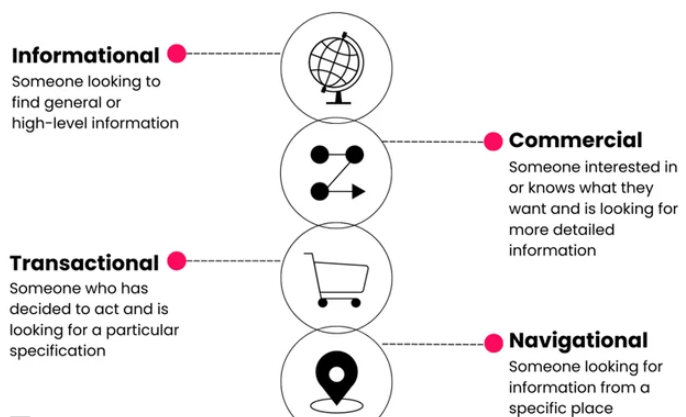
Before writing any page, ask:
What does the user want?
Do they want an answer?
A comparison?
A service?
A product?
A price?
A checklist?
A local business?
A definition?
A step-by-step guide?
For example:
“best SEO tools for small businesses” needs comparison.
“what is topical authority” needs a simple explanation.
“SEO agency near me” needs local trust and service proof.
“how to fix indexing issues” needs a clear process.
“AI SEO strategy” needs modern search context and examples.
If your content format does not match the intent, rankings become harder.
Write for Query Fan-Out
AI search is changing how queries work.
Google says AI Mode and AI Overviews may use “query fan-out,” meaning the system can run multiple related searches across subtopics and data sources to build a fuller response.
This matters.
It means one article should not only answer the main keyword.
It should also cover the related questions around that topic.
For example, an article on local SEO for dentists should naturally cover:
Google Business Profile
Dental service pages
Reviews
Local citations
Treatment-specific keywords
City pages
Photo updates
Local backlinks
Tracking calls and forms
Common local SEO mistakes
That does not mean stuffing every keyword.
It means covering the topic like a real expert.
Use AEO Without Making Content Robotic
AEO means Answer Engine Optimization.
In simple words, it means making your content easy to use as an answer.
Use:
Clear definitions
Question-based headings
Short answer sections
Tables where useful
FAQs
Step-by-step lists
Summary boxes
Natural language
Simple explanations
Example:
What is technical SEO?
Technical SEO means improving the parts of your website that help search engines crawl, understand, index, and rank your pages.
Then explain the topic in more detail.
This format helps readers and search systems.
Use GEO the Right Way
GEO, or Generative Engine Optimization, is about making your content useful for AI-generated search answers.
But do not overcomplicate it.
Google’s 2026 guidance says you do not need special schema, special markup, or machine-readable AI files to appear in generative AI search. Google also says structured data is not required for generative AI search, although it remains useful for normal rich results.
So the smarter approach is:
Write clearly.
Use strong headings.
Add original examples.
Include trusted sources.
Mention real experience.
Make important content visible in text.
Use images and videos where helpful.
Keep structured data accurate.
Build topical depth.
That is better than chasing every new AI SEO trend.
Do Not Publish Raw AI Content
AI tools can help with research, briefs, outlines, editing, and content gaps.
But raw AI content is usually too generic.
Google’s guidance on AI-generated content focuses on quality and helpfulness, not whether AI was used. The issue is not AI itself. The issue is low-quality content created mainly to manipulate rankings.
My rule is simple:
Use AI as an assistant, not the writer.
Use AI for:
Content briefs
Topic expansion
SERP analysis support
FAQ ideas
Outline improvement
Editing suggestions
Content gap checks
Meta title ideas
But always add:
Real experience
Examples
Opinions
Screenshots if possible
Data
Case studies
Brand voice
Human editing
AI can help you move faster.
But your expertise makes the content worth reading.
3. On-Page SEO Checklist
On-page SEO is where your content becomes easier for readers and search engines to understand.
Here is what matters now.
Title Tags
Your title should be clear, specific, and search-focused.
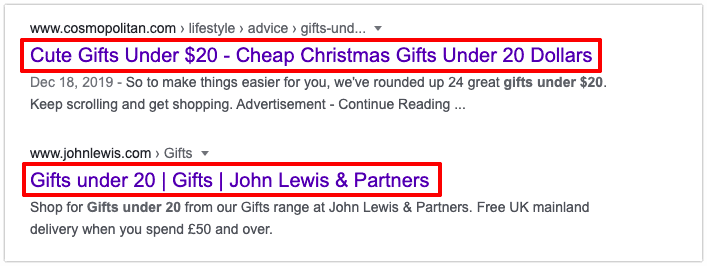
Good title:
Local SEO for Dentists: 2026 Guide to More Patient Leads
Weak title:
Best Tips for SEO Success
Use the primary keyword naturally, but make the benefit clear.
Meta Descriptions
Meta descriptions may not directly improve rankings, but they can improve clicks.
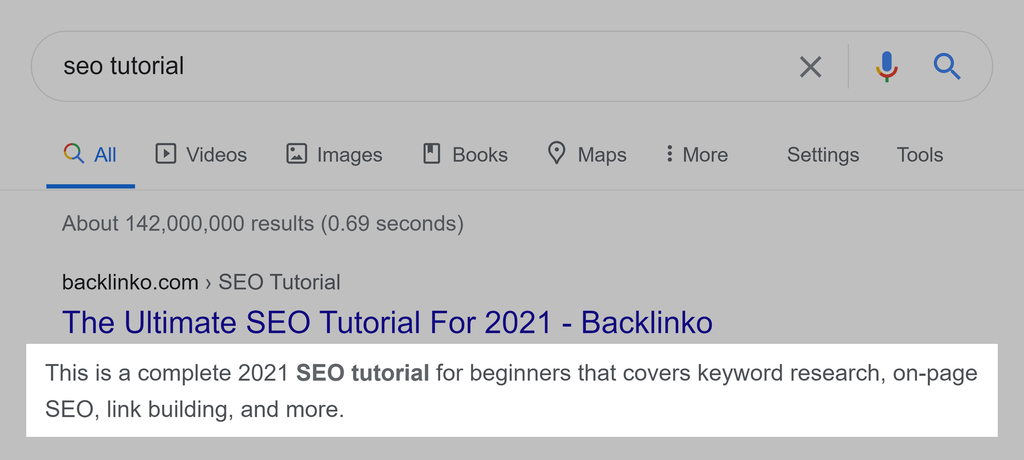
A good meta description should include:
The main topic
The reader benefit
A reason to click
Example:
Learn how dentists can use local SEO, Google Business Profile, reviews, service pages, and city content to get more patient leads in 2026.
Headings
Use headings to guide the reader.
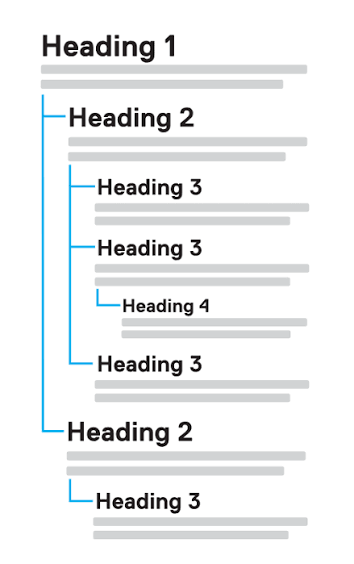
Do not use headings randomly.
A strong heading structure should follow the reader’s journey.
For example:
H1: Local SEO for Dentists
H2: Why Local SEO Matters for Dental Clinics
H2: Optimize Your Google Business Profile
H2: Build Treatment-Specific Service Pages
H2: Get More Patient Reviews
H2: Create City Pages
H2: Track Calls, Forms, and Appointments
This structure is clear.
First 100 Words
The first 100 words should quickly confirm that the reader is in the right place.
Do not start with generic lines.
Bad intro:
In today’s online world, SEO is important for businesses.
Better intro:
If your dental clinic is not showing up when people search “dentist near me,” you are losing patients to competitors who have stronger local SEO.
That speaks directly to the problem.
Semantic SEO
Do not repeat one keyword again and again.
Use related terms naturally.
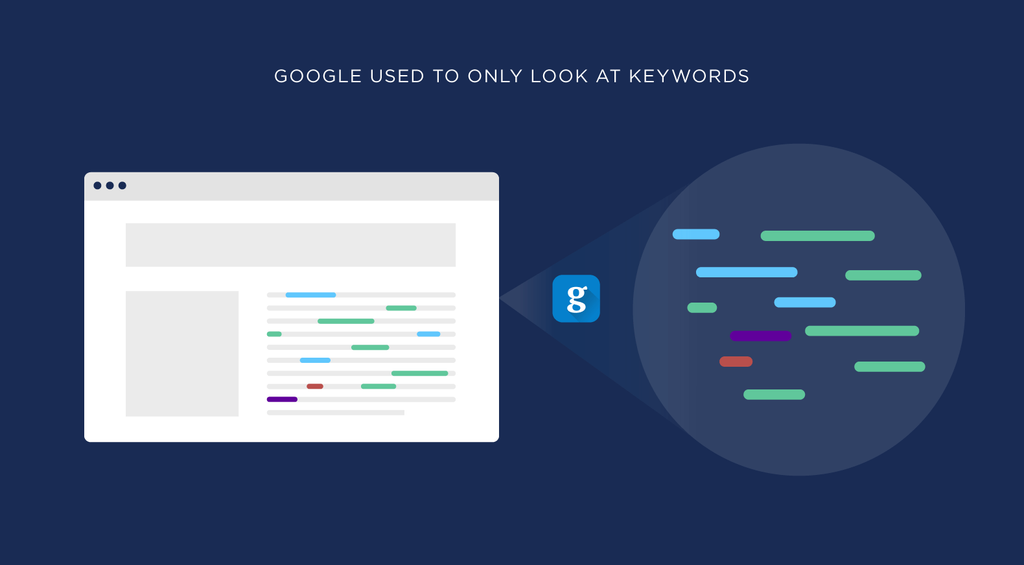
For example, if the topic is technical SEO, related terms include:
Crawlability
Indexing
Sitemaps
Robots.txt
Canonical tags
Core Web Vitals
Schema markup
Redirects
404 errors
Internal links
Page speed
This helps the page cover the topic properly.
Internal Linking
Internal links are still one of the easiest SEO wins.
Use them to connect:
Main guides
Service pages
Related blog posts
Location pages
Case studies
FAQs
Glossary pages
Use clear anchor text.
Good anchor:
technical SEO checklist
Weak anchor:
click here
Internal links help readers move to the next useful page. They also help Google understand which pages are connected.
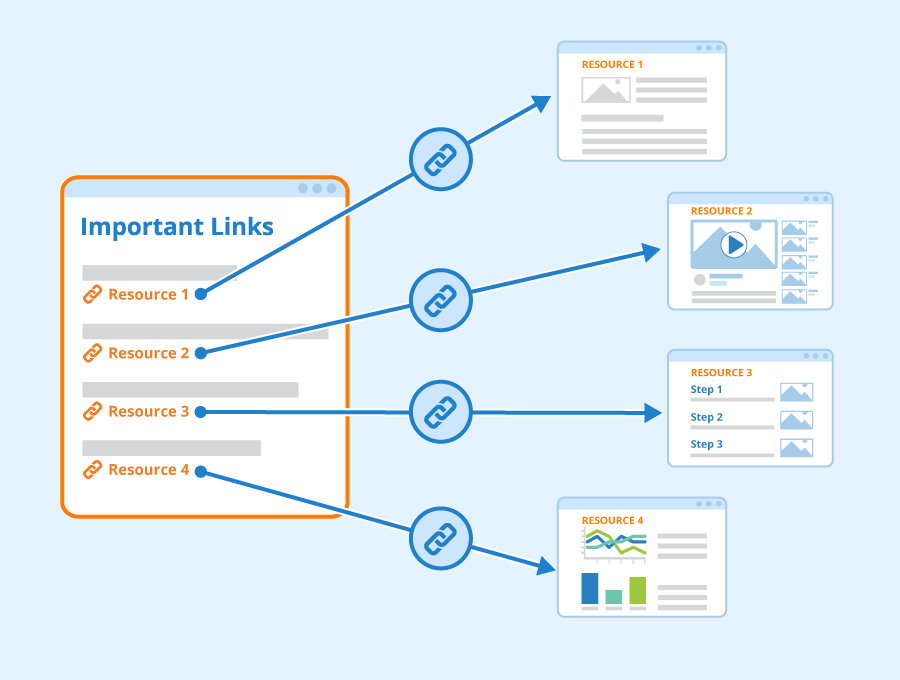
Google’s AI features guidance also lists internal links as one of the normal SEO basics that still matter for AI features.
Image SEO
Images are not just decoration.
Optimize:
File names
Alt text
Image size
Captions where useful
Image sitemap
Structured data where relevant
Original visuals
Screenshots
Infographics
For product, recipe, local, and visual-heavy websites, image SEO can bring meaningful visibility through Google Images and Google Lens.
Structured Data
Structured data helps Google understand your page and may qualify your pages for rich results. Google recommends JSON-LD when possible because it is easier to manage at scale.
Use structured data where it actually fits:
Article
FAQ
Product
LocalBusiness
Review
Breadcrumb
HowTo
VideoObject
Organization
Person
Do not add fake schema.
Your structured data should match visible content on the page.
4. Technical SEO Checklist
Technical SEO is the foundation.
If your website is slow, hard to crawl, poorly structured, or full of errors, your content has a weaker chance of performing well.
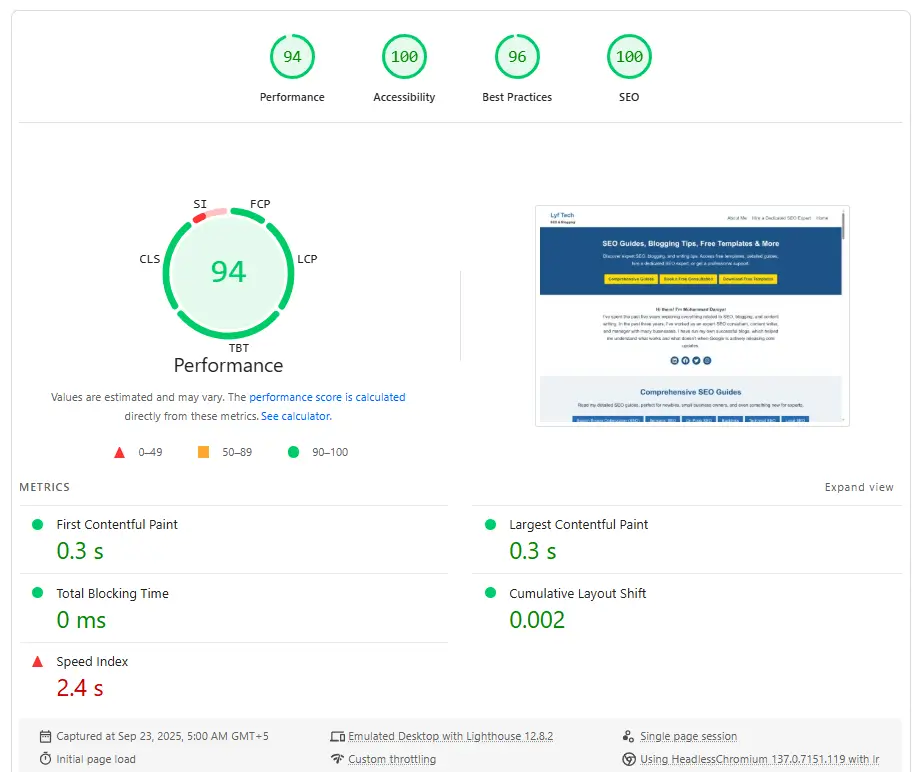
Core Web Vitals
Core Web Vitals still matter for user experience.
The main metrics to watch are:
LCP: loading performance
INP: interaction responsiveness
CLS: visual stability
Google confirmed that INP replaced FID as a Core Web Vitals metric in March 2024, so now you should focus on INP instead of FID.
Practical fixes:
Compress images
Use lazy loading
Reduce unused JavaScript
Improve server response time
Use quality hosting
Avoid heavy popups
Improve mobile layout
Limit third-party scripts
But remember:
Good Core Web Vitals alone do not guarantee rankings.
They support the full SEO system.
Crawlability
Make sure search engines can access your important pages.
Check:
Robots.txt
Sitemaps
Noindex tags
Canonical tags
Blocked resources
Crawl errors
Redirect chains
Duplicate pages
Thin archive pages
Use Screaming Frog or Sitebulb for full audits.
Indexing
A page cannot rank if it is not indexed.
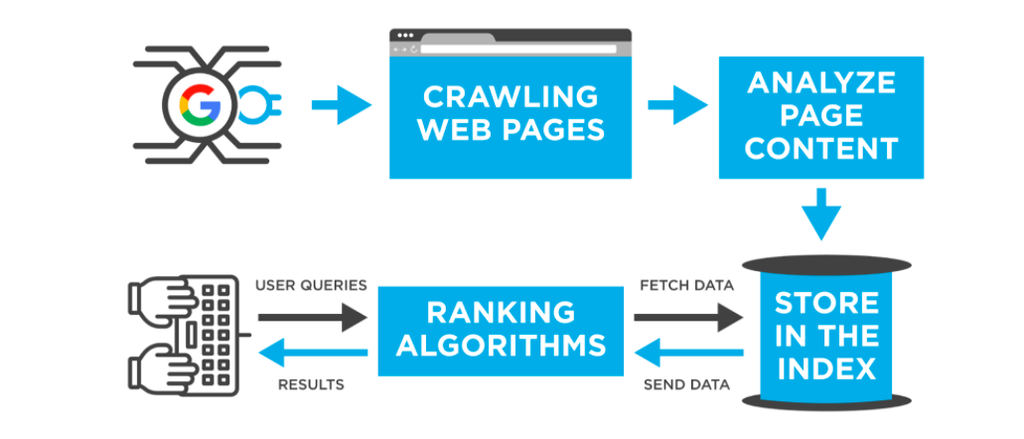
Use Google Search Console to check:
Discovered, currently not indexed
Crawled, currently not indexed
Duplicate without user-selected canonical
Alternate page with proper canonical
Blocked by robots.txt
Soft 404
Server errors
For important pages, use URL Inspection.
Site Architecture
Your website should be easy to understand.
A good structure looks like this:
Home
Services
Service pages
Location pages
Blog
Topic clusters
Contact
About
Case studies
Avoid burying important pages too deep.
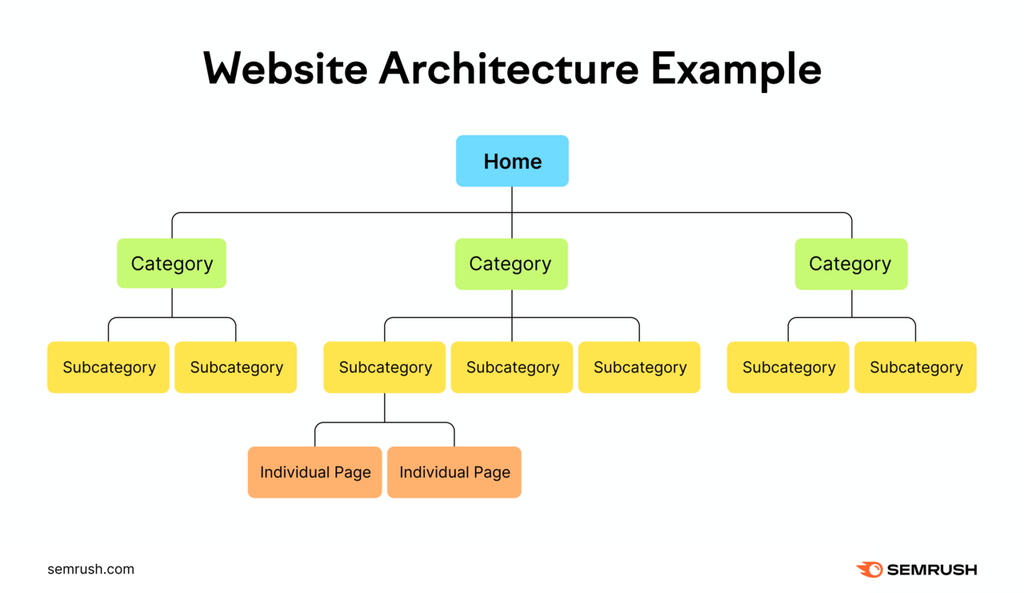
If a key page takes five clicks to reach, it may need better internal linking.
Mobile Experience
Mobile-first is not optional.
Check:
Button size
Font size
Menu clarity
Form usability
Page speed
Popups
Sticky headers
Tap spacing
Mobile layout
For local businesses, mobile experience is even more important because many searches happen on phones.
Accessibility
Accessibility helps real users.
It also improves site quality.
Check:
Alt text
Color contrast
Keyboard navigation
Clear labels
Readable fonts
Form labels
ARIA where needed
Descriptive link text
This is not only about SEO.
It is about making your site usable for more people.
llms.txt: Use Carefully, Not Blindly
Many 2025 articles treated llms.txt like the next must-have SEO file.
In 2026, I would be more careful.
Google’s own generative AI search guidance says you do not need to create new machine-readable AI files like llms.txt to appear in generative AI search.
So my recommendation is:
Do not treat llms.txt as required SEO.
You can test it if you want, especially for AI crawler guidance or content discovery experiments. But your real priorities should still be:
Clean HTML
Accessible content
Strong internal links
Accurate schema
Fast pages
Helpful content
Clear author and brand signals
Good crawl/index controls
Do not spend hours on llms.txt while your main pages are slow, thin, or poorly linked.
5. Build Topical Authority
Topical authority is one of the strongest SEO ideas for 2026.
It means your site becomes trusted around a subject because you cover it deeply and clearly.
Do not publish random posts.
Build content clusters.
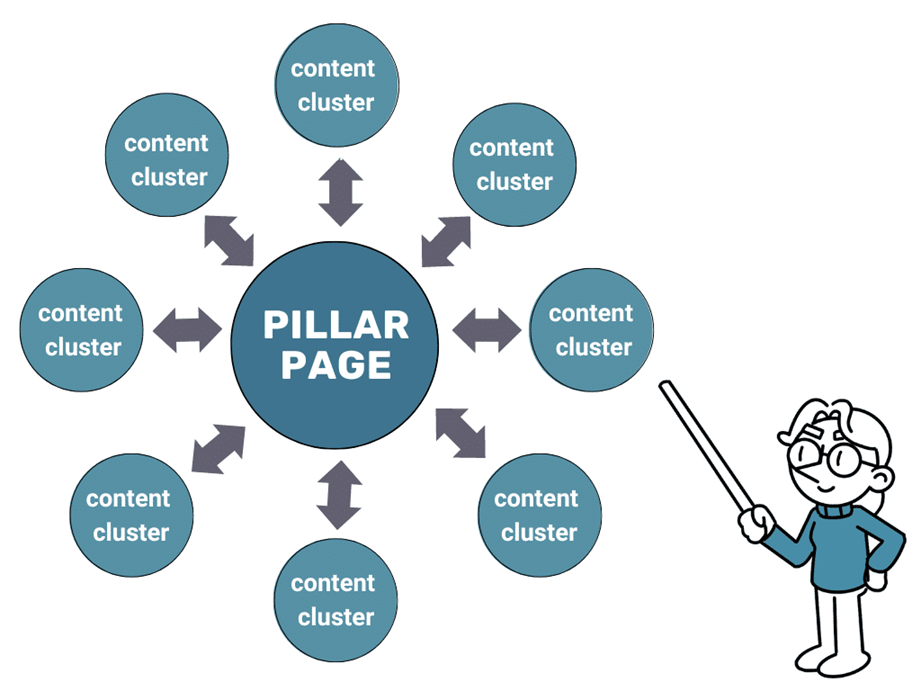
For example, if your main topic is SEO content writing, your cluster can include:
What is SEO content writing?
How to write SEO articles
Keyword research for bloggers
Search intent guide
SEO content brief template
SEO blog structure
Internal linking strategy
Topical authority guide
AI SEO strategy
Content audit checklist
How to update old blog posts
Each article supports the others.
This helps readers.
It also helps search systems understand your expertise.
For businesses, build clusters around your services.
Example for a dental clinic:
Dental implants
Dental implant cost
Dental implant recovery
Dental implant vs bridge
Single tooth implant
Full mouth implants
Dental implant FAQs
Dental implant consultation page
Dental implants in [city]
This is how you move from random blogging to a real SEO asset.
6. Off-Page SEO and Brand Authority
Backlinks still matter.
But off-page SEO is no longer only about links.
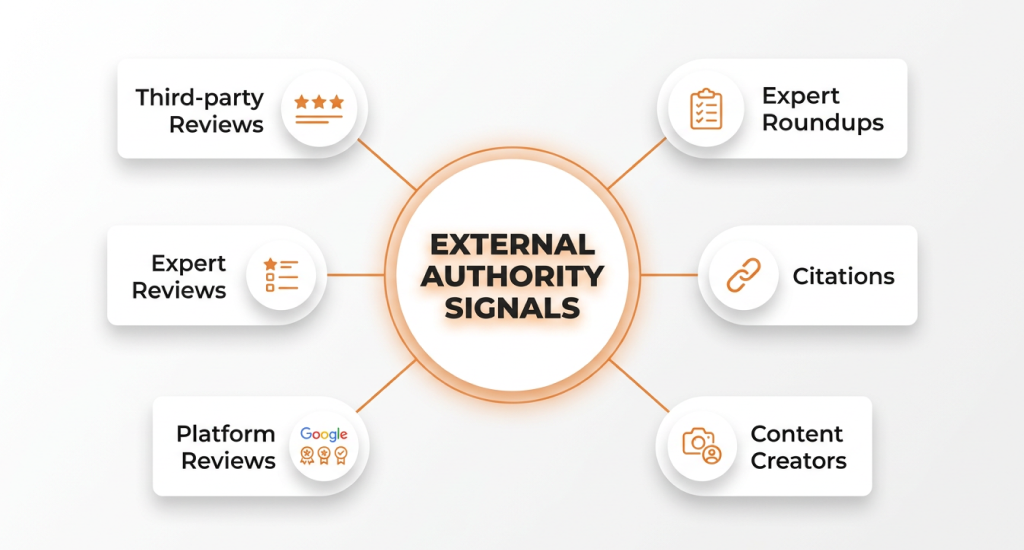
It is about trust across the web.
Quality Backlinks
Focus on relevant, editorial links from trusted sites.
Good link sources:
Industry blogs
Local news
Guest posts
Digital PR
Research reports
Podcasts
Business directories
Case studies
Partner websites
Resource pages
Avoid spammy links, PBNs, fake directories, and mass link packages.
Brand Mentions
AI search systems and users both pay attention to brands that appear across the web.
Track mentions on:
News sites
Forums
Reddit
Quora
LinkedIn
YouTube
Podcasts
Industry roundups
Local directories
Even unlinked mentions can support brand visibility.
But do not chase fake mentions.
Google’s generative AI guidance warns against seeking inauthentic mentions because spam systems still matter.
Reviews
For local and service businesses, reviews are authority signals.
Focus on:
Google reviews
Industry review sites
Video testimonials
Case studies
Before/after proof
Client stories
Review responses
Do not fake reviews.
A strong review profile should mention real services, locations, results, and customer experience.
Digital PR
Create assets people want to cite.
Examples:
Original surveys
Industry data
Calculators
Free templates
Interactive tools
Local reports
Comparison studies
Expert roundups
If your content gives people something worth referencing, links become easier.
7. Local SEO Checklist
Local SEO is still one of the fastest ways for service businesses to get leads.
If you serve a city, region, or neighborhood, this matters.
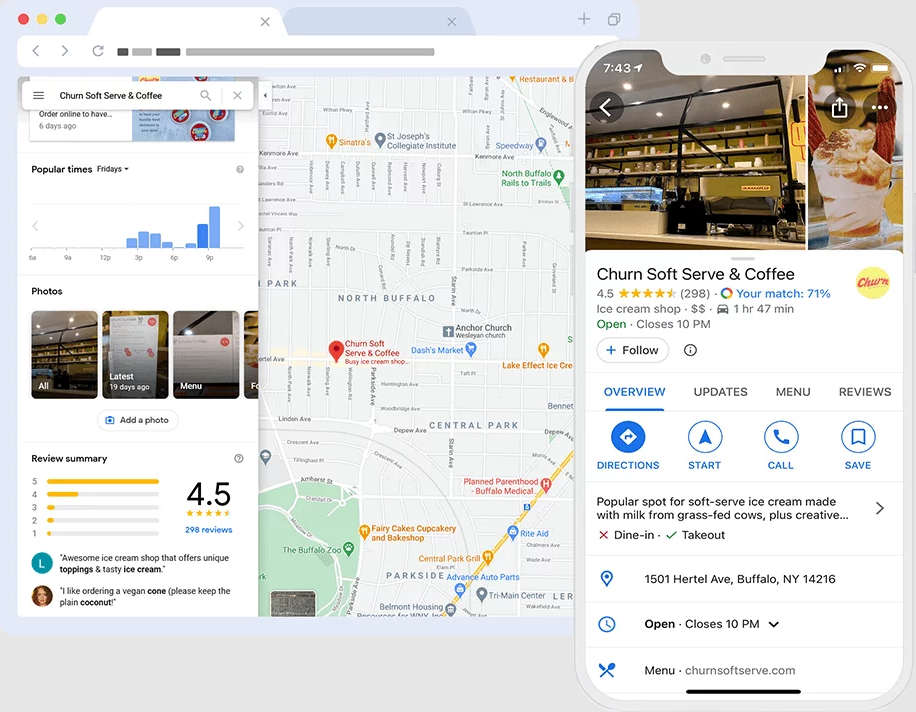
Google Business Profile
Optimize:
Business name
Primary category
Secondary categories
Services
Products
Business hours
Photos
Videos
Q&A
Booking link
Description
Attributes
Reviews
Posts
Add real photos.
Not stock images.
Show your location, team, work, vehicles, office, tools, and happy customers where appropriate.
Reviews and Replies
Ask customers for honest reviews.
Reply to every review.
Use replies that mention the service naturally.
Example:
Thank you for choosing us for your emergency plumbing repair in Dallas. We’re glad our team could help quickly.
Do not stuff keywords.
Keep it natural.
Local Landing Pages
If you serve multiple cities, build proper local pages.
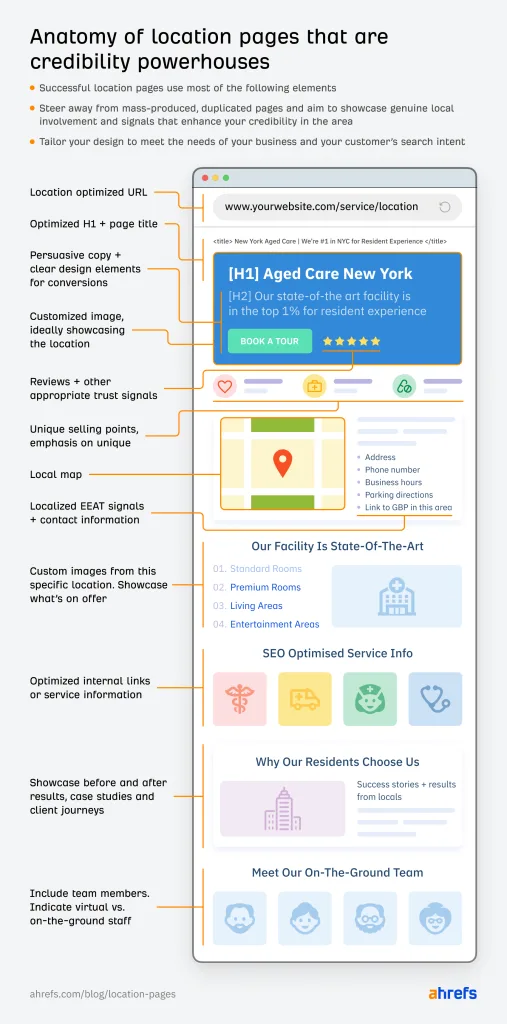
Each page should include:
City-specific intro
Services offered in that area
Nearby landmarks
Local proof
Testimonials
FAQs
Driving distance or service area details
Clear CTA
Map or location info where relevant
Do not duplicate the same page 30 times with only the city name changed.
That is weak local SEO.
Local Citations
Keep NAP consistent:
Name
Address
Phone number
Check:
Google Business Profile
Bing Places
Apple Maps
Yelp
Facebook
Industry directories
Local business listings
Inconsistent information can weaken trust.
Local Content
Create content around local intent.
Examples:
Best time to service AC in Phoenix
Dental implant cost in Los Angeles
Moving checklist for Dallas apartments
Roof repair after storms in Miami
SEO for dentists in California
Local content should feel local.
Not generic.
8. International SEO Checklist
If your business targets multiple countries or languages, international SEO needs careful setup.
Hreflang
Use hreflang when you have different language or regional versions of a page.
For example:
English US
English UK
French Canada
Spanish Mexico
Hreflang helps Google show the right version to the right user.
Localization
Do not only translate.
Localize.
That means adjusting:
Currency
Spelling
Examples
Measurements
Legal references
Seasonal terms
Cultural context
Search behavior
Local competitors
AI translation can help with first drafts, but human review is still important.
URL Structure
Common options:
ccTLD: example.fr
Subdirectory: example.com/fr/
Subdomain: fr.example.com
For many businesses, subdirectories are easier to manage.
For strong country-specific branding, ccTLDs can make sense.
Choose based on resources, goals, and market size.
Local Links
If you want to rank in a country, build trust in that country.
Get links and mentions from:
Local media
Local directories
Local partners
Local blogs
Local associations
Local review platforms
International SEO is not only a language.
It is local trust at scale.
9. Voice, Visual, Video, and Agent SEO
Search is no longer only typed text.
People now search by speaking, uploading images, watching videos, and asking AI agents.
Voice Search
Voice queries are usually conversational.
Optimize by answering natural questions.
Examples:
What is the best SEO strategy for a new blog?
How much does local SEO cost?
How do I improve Google Business Profile rankings?
What is the fastest way to fix indexing issues?
Use short direct answers first.
Then explain.
Also read my detailed voice search SEO guide.
Visual Search
Visual SEO matters for:
eCommerce
Food
Fashion
Home services
Travel
Real estate
Local businesses
Product reviews
Optimize:
File names
Alt text
Image quality
Structured data
Image sitemap
Page speed
Original visuals
Google’s product structured data guidance told us that product data can appear in Google Search, Google Images, and Google Lens when implemented correctly.
Video SEO
In 2026, video is part of the search.
Use:
YouTube videos
Short clips
Transcripts
Video schema
Clear titles
Chapters
Thumbnails
Embedded videos
FAQ-style clips
For local businesses, short videos can build trust quickly.
Examples:
Office walkthrough
Service explanation
Before/after result
Client question answered
Team introduction
Process video
Agent-Friendly Websites
AI agents are starting to browse, compare, summarize, and complete tasks for users.
Google’s guidance explains that agents may inspect pages, render pages, read DOM structure, and use accessibility signals to complete tasks.
To prepare:
Keep navigation simple
Make pricing easy to find
Use clear product/service information
Avoid blocking key content behind messy scripts
Use accessible forms
Add clear CTAs
Use structured data where useful
Keep important content visible in HTML text
This is not about tricking AI agents.
It is about making your website easy to use.
For humans and machines.
10. Monitor, Update, and Improve Every Month
SEO in 2026 changes fast.
You cannot publish once and disappear.
Track monthly:
Organic traffic
Search Console impressions
Clicks
CTR
Average position
Conversions
Indexed pages
Lost rankings
New keyword opportunities
AI answer visibility
Backlinks
Brand mentions
Technical errors
Content decay
Refresh Old Content
Update content when:
Stats are outdated
Search intent changed
Competitors improved
Internal links are weak
Examples are old
The intro is slow
The title has low CTR
The page lost rankings
The content lacks depth
Content updates are often easier than writing new posts.
Watch SERP Changes
Search results now change quickly because of:
AI Overviews
AI Mode
Video carousels
Forum results
Reddit results
Shopping results
Local packs
Image results
Featured snippets
Zero-click answers
If rankings drop, check the actual SERP before making changes.
Sometimes the page did not get worse.
The search result layout changed.
Build a Monthly SEO Routine
Every month, do this:
Check Search Console
Review top pages
Review declining pages
Update 3–5 old articles
Add internal links from old to new content
Fix technical errors
Check Core Web Vitals
Review backlinks
Track brand mentions
Review competitors
Plan next content cluster
SEO works better when it becomes a system.
Not a one-time checklist.
Final Thoughts
SEO in 2026 is not dead.
But lazy SEO is.
You cannot win by publishing generic AI content, repeating keywords, buying weak backlinks, or creating thin location pages.
The brands that win in 2026 will do a few things better than everyone else.
They will understand search intent.
They will answer questions clearly.
They will build topic depth.
They will show real experience.
They will make websites faster and easier to use.
They will earn trust across the web.
They will optimize for Google, AI search, local search, visual search, and users at the same time.
That is the real SEO checklist now.
Do not chase every trend.
Build a strong foundation.
Then keep improving it.
That is how your brand stays visible in 2026 and beyond.
