When I started ManualsPedia, the goal wasn’t just to publish content, it was to test a scalable SEO content system from scratch.
No authority.
No backlinks.
No traffic.
Just a clean domain and a structured plan.
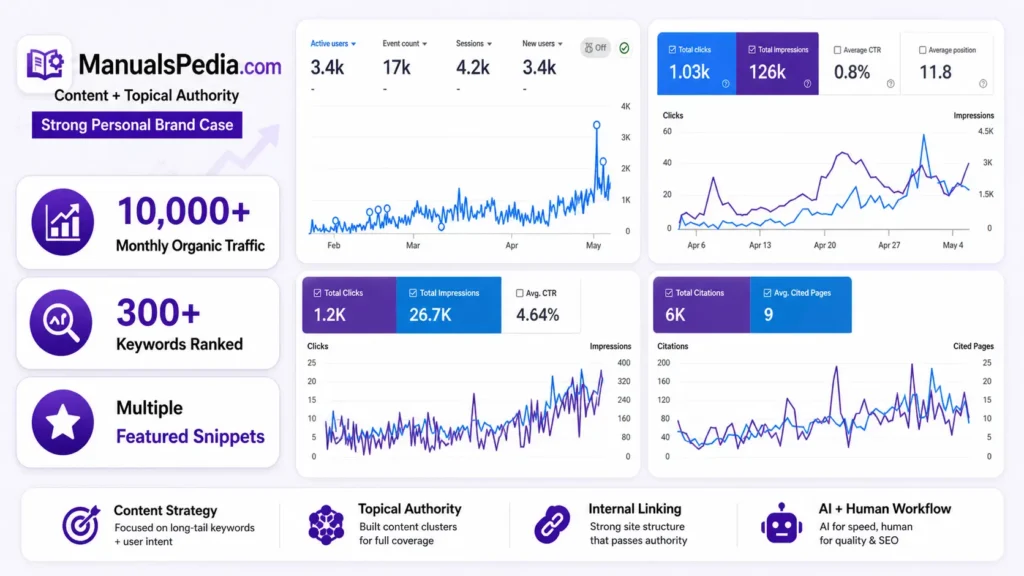
Okay here, let me show you exactly how I used content + topical authority + internal linking to grow a brand-new website to 10,000 monthly organic visitors.
Quick Results Snapshot
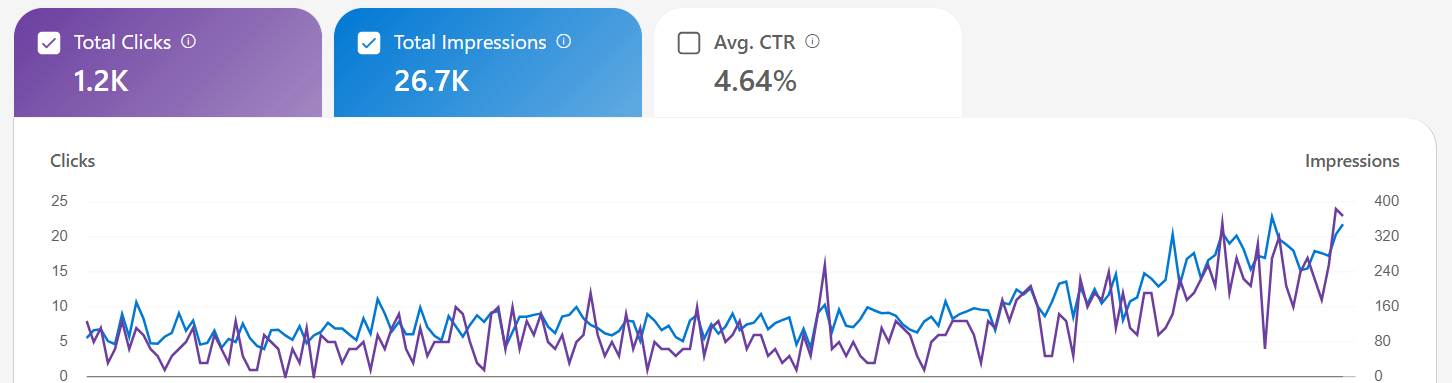
- 0 → 10,000+ monthly organic traffic
- 300+ keywords ranked (many long-tail, low-competition wins)
- Dozens of featured snippets captured
- Indexed pages scaled consistently (no volatility drops)
- AI search visibility achieved (citations in AI answers)
Project Overview
- Website: ManualsPedia.com
- Niche: Product manuals & informational content (articles)
- Starting Point: New domain (zero traffic)
- Primary Goal: Build organic traffic using SEO content only
The Core Strategy
From my experience, new websites don’t grow with random blog posts.
They grow with structured content systems.
So instead of chasing keywords randomly, I focused on:
1. Topical Authority
2. Programmatic Content Scaling
3. Internal Linking System
4. Long-Tail Keyword Domination
5. AI-Optimized Content Structure
Step 1 — Topic Selection & Niche Positioning
The first decision I made was:
Choose a niche where information is consistent, structured, and scalable.
Manuals content fit perfectly because:
- High search demand
- Repetitive structure
- Long-tail keyword opportunities
- Low competition in many areas
Step 2 — Long-Tail Keyword Strategy
Instead of targeting competitive keywords, I focused on:
👉 Long-tail, low-competition queries
Examples:
- how to reset [device name]
- [product] user manual
- troubleshooting [device issue]
These keywords:
- rank faster
- convert better
- bring consistent traffic
Step 3 — Content Scaling System
I built a repeatable content structure.
Each article followed:
- clear headings
- step-by-step instructions
- simple explanations
- structured formatting
This made it easy to publish at scale while maintaining quality.
Step 4 — Topical Authority Model
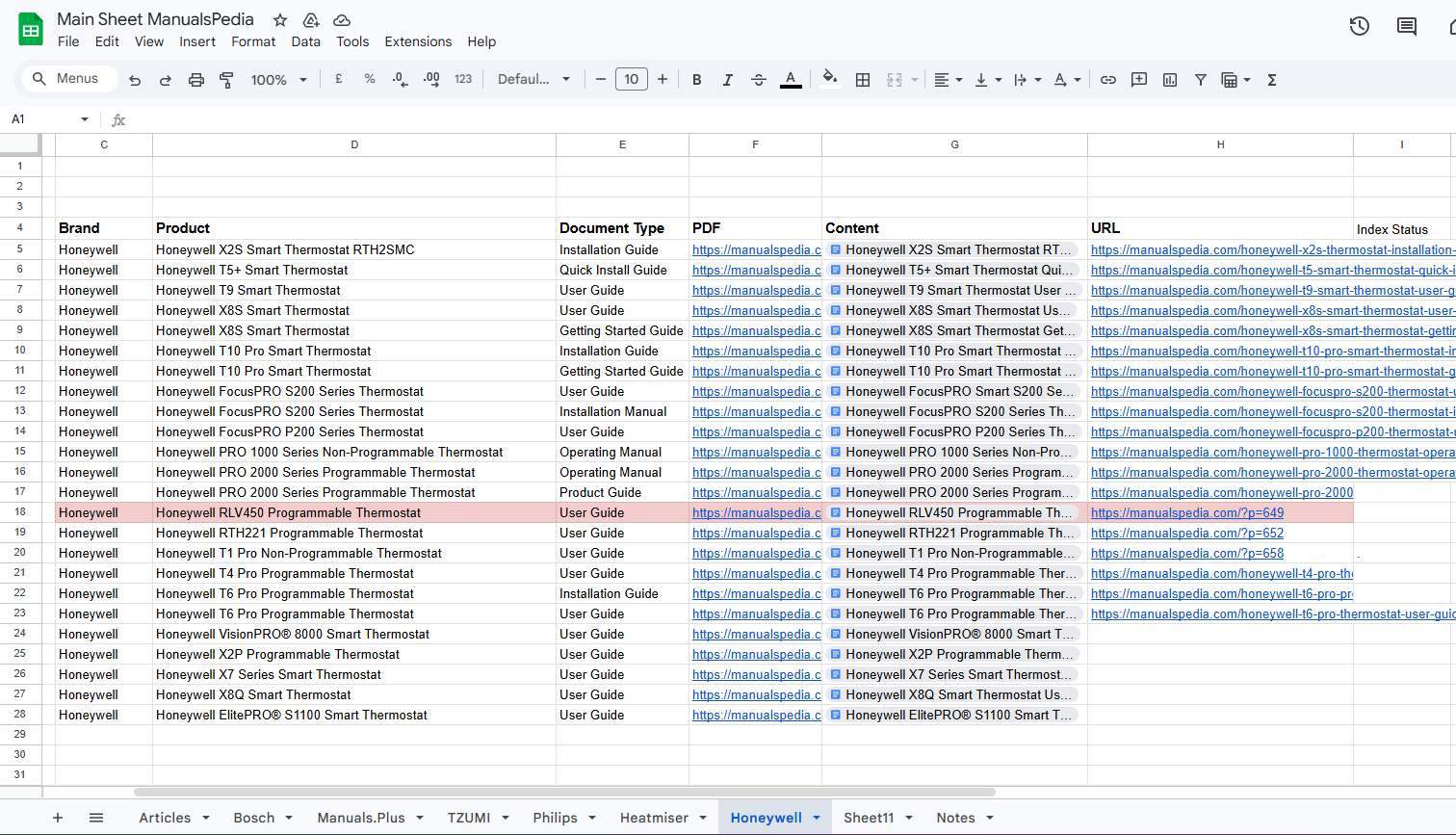
Instead of publishing isolated posts, I created clusters.
Example:
Main topic → Device manuals
Supporting topics:
- setup guides
- troubleshooting articles
- feature explanations
This helped Google understand the site as an authority source
Step 5 — Internal Linking System
This was one of the biggest growth drivers.
From my experience, internal linking is often ignored—but it can significantly improve rankings.
What I implemented
- linked related articles together
- connected pages within clusters
- used contextual anchor text
- avoided repetitive anchor usage
Example:
Instead of generic anchors, I used variations like:
- troubleshooting steps for this device
- detailed setup guide
- product usage instructions
This improved crawlability and ranking distribution.
Step 6 — AI + Human Content Workflow
I tested a structured workflow using AI tools.
My process
- AI for research + structure
- Human editing for clarity + accuracy
- SEO optimization layer added manually
This combination allowed me to:
- publish faster
- maintain quality
- stay competitive in search
Step 7 — Content Consistency
The growth didn’t happen from one article.
It came from consistent publishing.
- new content regularly
- continuous indexing
- gradual authority build
Google rewards consistency more than bursts.
Step 8 — Technical SEO Basics
Even though content was the focus, I ensured:
- clean URL structure
- proper indexing
- fast loading pages
- mobile-friendly design
This removed technical barriers to ranking.
Results Breakdown
Traffic Growth
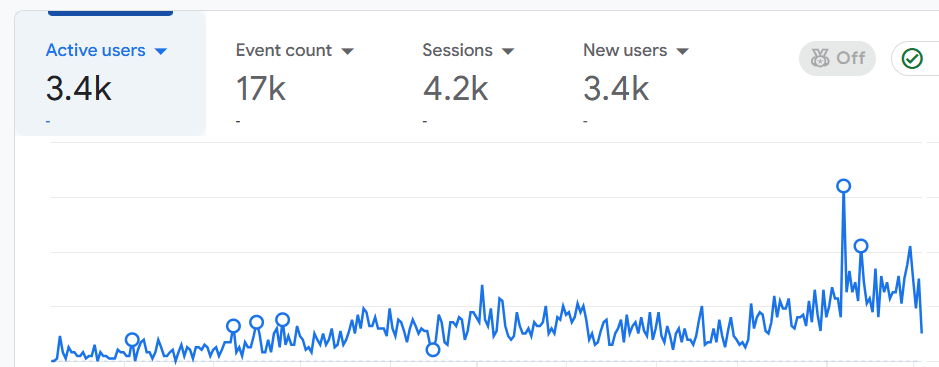
- Month 1 → Almost zero traffic
- Month 3 → steady growth begins
- Month 6 → thousands of monthly visits
- Month 9+ → crossed 10K monthly traffic
Keyword Rankings
- Hundreds of long-tail keywords ranking
- Multiple articles reaching top positions
- Strong indexing rate across content
AI Search Visibility
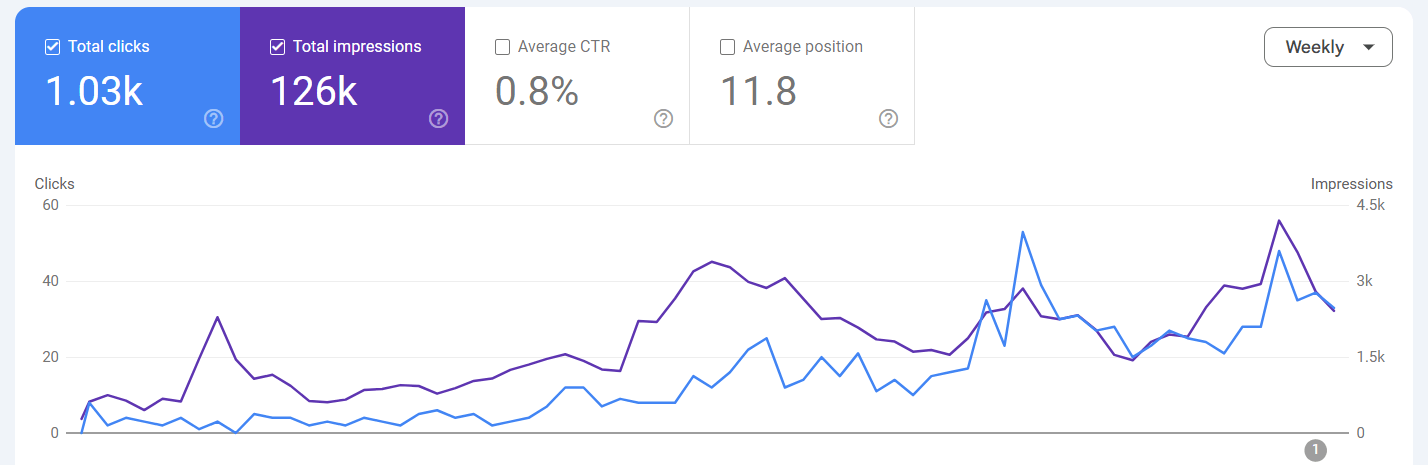
One of the most interesting outcomes:
👉 Articles started getting cited in AI search engines
Including:
- Google AI Overviews
- Chat-based search tools
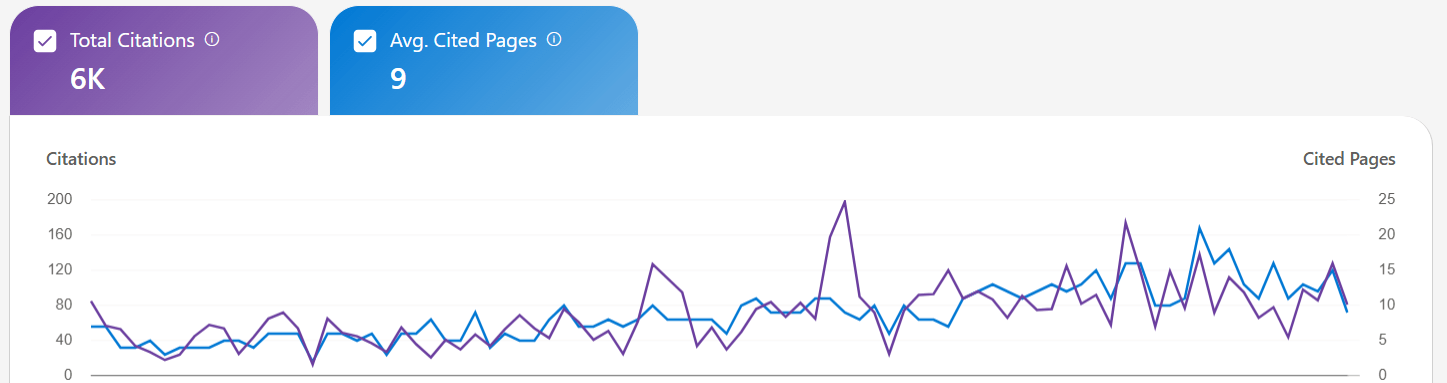
This happened because:
- content was structured
- answers were clear
- topics were well covered
What Actually Worked
From my experience, these were the biggest growth drivers:
✔ Long-tail keyword targeting
✔ Content consistency
✔ Topical clustering
✔ Internal linking
✔ AI-friendly formatting
What Didn’t Matter (At Early Stage)
- Backlinks (minimal impact early)
- Domain authority (not required initially)
- Expensive tools
👉 Content + structure mattered more.
Key Lessons
- 1. You Don’t Need Authority to Start Ranking
You need the right content system. - 2. Long-Tail Keywords Are a Growth Engine
They bring traffic faster and easier. - 3. Internal Linking Multiplies Results
It distributes ranking power across pages. - 4. AI-Optimized Content Has Future Advantage
Structured content gets picked up by AI systems. - 5. Consistency Beats Perfection
Publishing regularly wins.
Summary
ManualsPedia proved something important:
SEO growth is predictable when you follow a system.
It’s not luck.
It’s not random.
It’s structured execution over time.
Want to Build Similar Traffic?
If you’re planning to grow a new website:
👉 Book a free consultation with me, and I’ll help you to create a strategy for that.